

Window shopping can quickly get confusing once measurements come into play. A guide to standard window sizes can be a useful starting point, especially when comparing styles or planning a budget.
What Is a Standard Window Size?
A standard size is simply a commonly manufactured window dimension. It does not mean every brand carries exactly the same sizes or that your existing opening will match one perfectly.
Here is a quick window size chart with typical ranges:
| Window Type | Common Size Range |
|---|---|
| Single/Double-Hung | 24-48″ wide x 36-72″ tall |
| Sliding | 36-84″ wide x 24-60″ tall |
| Casement | About 17-35″ wide x 35-73″ tall |
| Awning | Often 24-60″ wide, usually shorter in height |
| Picture | About 24″ x 12″ up to 96″ x 96″ |
| Bay/Bow | Varies by configuration |
Please note that actual availability varies by manufacturer and product line.
How Window Size Notation Works
Many manufacturers use four-digit codes. The first two digits describe width, and the last two describe height in feet and inches.
For example, a “3050” window is generally 3 feet wide by 5 feet tall. A “2436” is 2 feet 4 inches wide by 3 feet 6 inches tall.
Manufacturers do not all use identical notation, so always check the product specifications rather than ordering from the code alone.
Standard Single-Hung and Double-Hung Window Sizes
Single- and double-hung windows are among the most common residential styles. Typically, standard double-hung window sizes range from about 24 to 48 inches wide and 36 to 72 inches tall.
Common combinations include:
- 24″ x 36″
- 28″ x 48″
- 36″ x 48″
- 36″ x 60″
- 48″ x 72″
Common Sliding, Casement and Awning Window Sizes
- Sliding windows are usually wider than they are tall, with common window sizes including 36″ x 24″, 60″ x 36″, and 72″ x 48″.
- Casement windows tend to be taller and narrower. Common examples are 24″ x 36″, 30″ x 48″, and 36″ x 72″.
- Awning windows are typically shorter and wider, making them useful above other windows or in spaces where privacy matters.
Picture, Bay and Bow Window Sizes
Picture windows offer much more sizing flexibility because they do not open. They can range from relatively small units to expansive panes several feet wide.
Bay and bow windows are different because their overall size depends on multiple window units, projection depth, and installation angle. These are especially important to measure professionally because the complete assembly must fit and be properly supported.
Standard Window Sizes by Room
Room function often influences window size:
- Bedrooms: Hung or sliding windows that balance light, ventilation, and applicable egress requirements
- Living rooms: Larger picture, sliding, bay, or bow configurations
- Kitchens: Casement, sliding, or awning windows that fit available counter and wall space
- Bathrooms: Smaller awning or privacy-glass windows are common
Local building requirements may also affect allowable replacement window sizes, particularly where emergency egress is required.
How to Measure for Replacement Windows
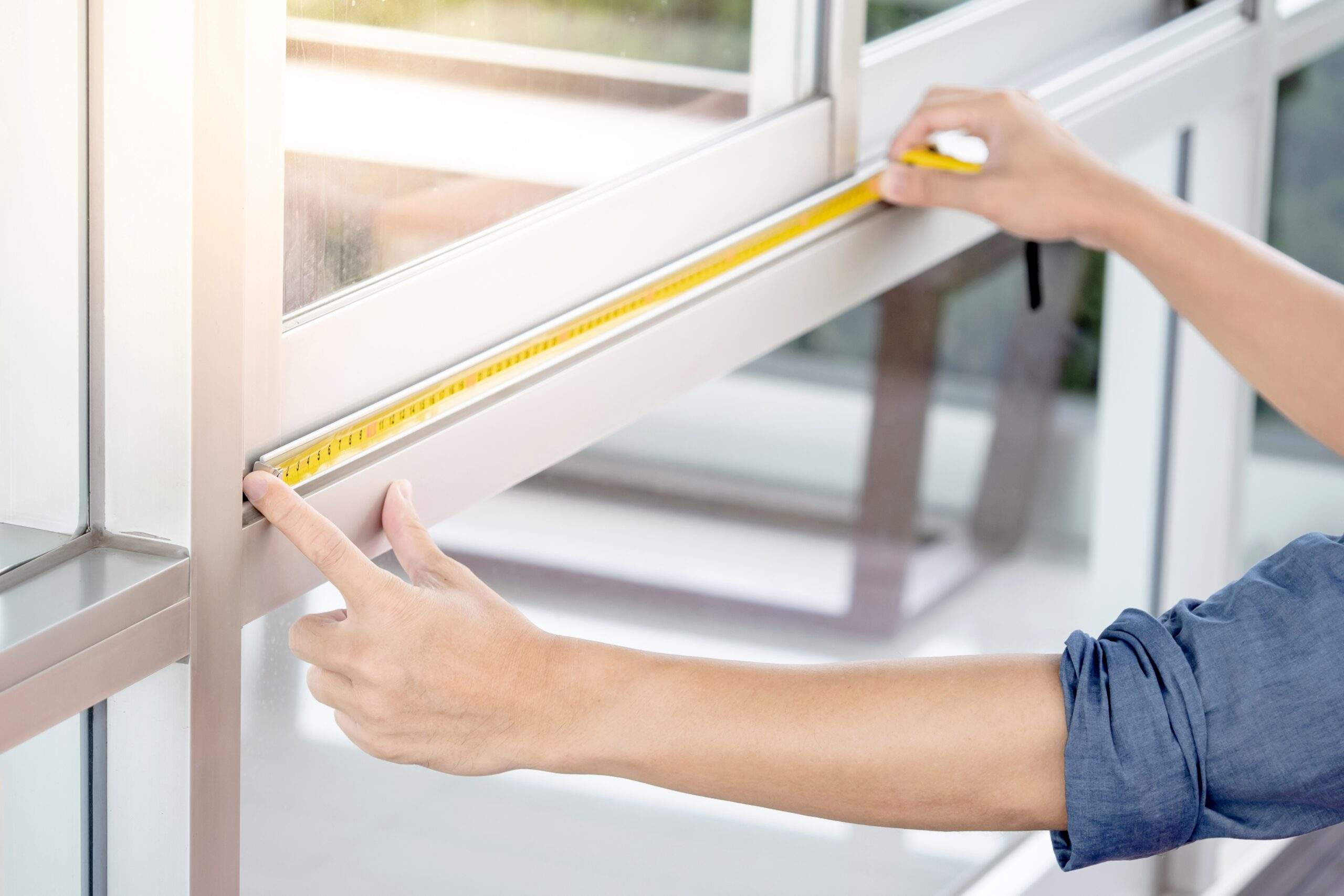
First, take preliminary measurements in three places across the width and three places down the height. Record the smallest measurement, and measure the window opening rather than simply measuring the visible glass.
These measurements are useful for planning, but professional verification is important before ordering. The replacement unit, existing frame, and rough opening are related measurements, not necessarily identical ones.
When Are Custom Windows Necessary?
Custom sizing may be needed when an existing opening does not match available standard dimensions, which is common in older homes, remodeled properties, and houses with distinctive architectural features.
Custom windows can also make sense when you want to preserve an unusual opening rather than alter the surrounding wall.
Choosing Windows for the Texas Climate
Window size is only one part of the decision. Texas homeowners should also consider solar heat gain, energy efficiency, frame durability, and how much direct sun each opening receives.
If you are comparing sizes, styles, or performance options, Expo Home Improvement can help. Explore our window replacement services or contact our team to review your options today.
Photo credit: Summer Paradive